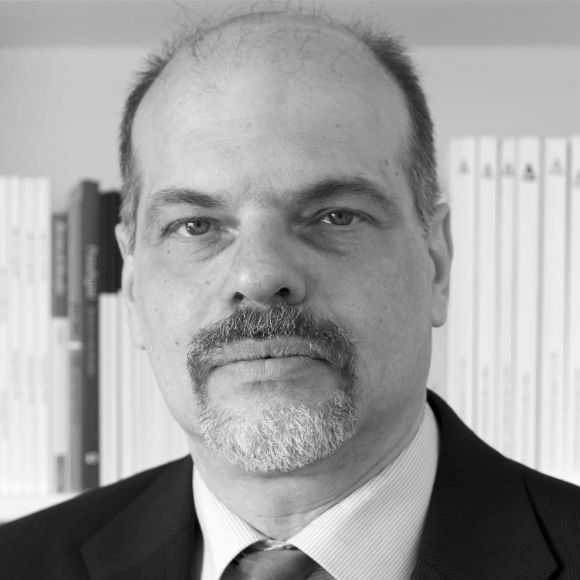
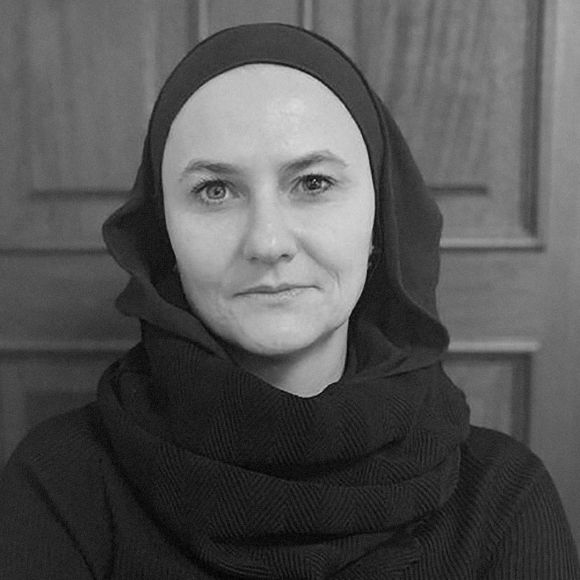
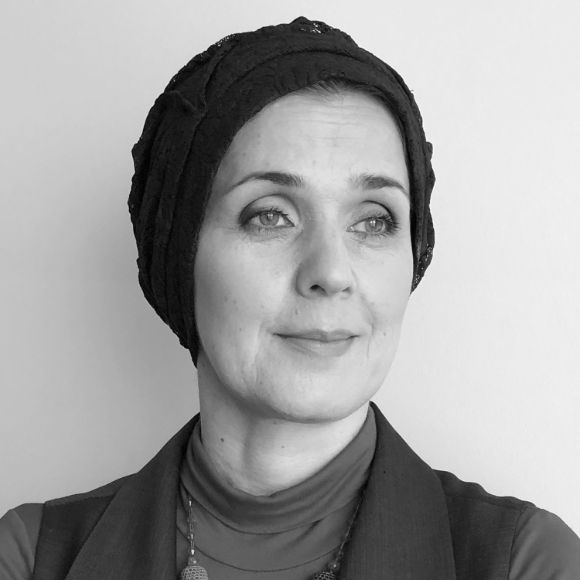
Prof. Elvio Baccarini is a Full Professor of Ethics and Political Philosophy in the University in Rijeka. He holds a PhD from the University of Trieste (Italy). His work focuses on areas such as public decision-making and democracy, multiculturalism and pluralism, medical ethics, and the ethics of enhancement.
He has published several books and articles in journals such as Journal of Medical Ethics, International Studies in the Philosophy of Science, Grazer Philosophische Studien, Acta Analytica, Philosophies, and others. He has also taught as a guest lecturer in the MA programs in Philosophy, Politics, and Public Affairs at the University Vita-Salute San Raffaele Milano and the State University of Milan, as well as in the MA program in Philosophy, Politics, and Ethics at the University of Bochum.
Aleksandra Đurić Milovanović
Aleksandra Djurić Milovanović, PhD in Ethnology and Anthropology, is a Principal Research Fellow at the Institute for Balkan Studies of the Serbian Academy of Sciences and Arts in Belgrade and a Project Coordinator at the International Dialogue Centre KAICIID in Lisbon (Portugal).
Her main scientific interests include religious minorities, interreligious dialogue, religion and human rights, and migration studies. Aleksandra collaborated with ODHIR – OSCE, Religions for Peace, Berkley Center for Religion, Peace and World Affairs and many other institutions dealing with dialogue, inclusion of minority communities.
She has published four monographs and one handbook, edited three international collections of works in English, and published as an author or co-author of a large number of works in journals and edited volumes. She is a member of the Committee for National Minorities and Human Rights at the Serbian Academy of Sciences and Arts. Her latest monograph is The Untold Journey of the Nazarene Emigration from Yugoslavia to North America (Lexington Books 2024).
Đermana Kurić
Đermana Kurić is a Research Associate in the ERC BILQIS project at the Irish Centre for Human Rights, University of Galway.
Previously, she served as an Adviser on Combating Racism, Xenophobia, and Discrimination at the OSCE’s Office for Democratic Institutions and Human Rights in Warsaw, Poland (2016-2021) with her work specifically focusing on policies countering intolerance and discrimination against Muslims across 57 OSCE participating States.
She received her BA degree in English Language and Literature, University of Sarajevo (2004), MA degree in Religious Studies from the Center for Interdisciplinary Postgraduate Studies, University of Sarajevo (2009) (in cooperation with Arizona State University, University of Oslo and the University of Copenhagen) and is currently a PhD candidate in Sociology of Religion with her thesis focusing on Bosnian Muslim Women in Socialist and Post-Socialist Bosnia and Herzegovina, at the Faculty of Political Studies, University of Sarajevo.
Stipe Odak
Stipe Odak is a Professor of Ethics at the Faculty of Theology and Religious Studies at the Université catholique de Louvain. He earned a PhD in Social and Political Studies from the same institution and a doctorate in Theology from KU Leuven.
His work examines intergroup tensions, collective remembrance, and reconciliation processes. He has carried out extensive field research in Bosnia and Herzegovina, analyzing the role of religious leaders in peacebuilding efforts. His studies also explore how memories of the 1994 Rwandan genocide against the Tutsi are transmitted across generations, as well as the global phenomenon of forced disappearances.
Alongside Zoran Grozdanov, he co-edited an introductory volume on Balkan Contextual Theology, published by Routledge.
Branko Sekulić
Branko Sekulić is an Adjunct Assistant Professor at the University Center for Protestant Theology “Matthias Flacius Illyricus” in Zagreb, president of the Institute for Theology and Politics, and Visiting Researcher at the Ökumenisches Institut, Universität Münster. His research focuses on ethnoreligiosity, nationalism, and the intersections of religion and politics in the Balkans and Eastern Europe.
He has published The Theology of Ethnocultural Empathic Turn: Getting to the Core of Sacralized Crime (Lexington, 2024) and Ethnoreligiosity in the Contemporary Societies of the Former Yugoslavia (Lexington, 2022).
He holds a doctoral degree and habilitation in Systematic Theology from the Faculty of Protestant Theology at Ludwig-Maximilian University in Munich, as well as master’s degrees from the Theological Faculty “Matthias Flacius Illyricus” in Zagreb and the Ecumenical Institute of the Ukrainian Catholic University in Lviv, and was a visiting researcher/professor at Stanford’s Center for Russian, East European, and Eurasian Studies.
Zilka Spahić Šiljak
Zilka Spahić Šiljak is associate professor in gender studies. As human rights activist and Muslim feminist, she combines her academic work and activism in peacebuilding teaching and advocacy.
Her research focuses on the intersection of gender, religion and peacebuilding in the Balkans region. Her recent research publications explore gender mainstreaming in higher education, cultural and economic aspects of menstrual poverty and leadership of women in politics and business.
She currently serves as academic director of the University Gender Resource Center at the University of Sarajevo and as director of TPO Foundation. At the University of Sarajevo she runs the first online school Feminism and Religion (FER) for the Balkans region as a platform for challenging gender stereotypes that are often justified both by religion and culture.
Gordana Uzelac
Gordana Uzelac is Reader in Sociology at London Metropolitan University, where she is the course leader for the BSc in Psychology and Sociology.
Gordana obtained her undergraduate degree at the Department of Sociology, University of Zagreb, Croatia, and her MSc degree in Sociology from the Central European University, Prague, Czechia. In 2002 she obtained her PhD degree in Ethnicity and Nationalism at the London School of Economics, London. Her interests focus on theories of nation and nationalism, nationalism in Croatia and the Balkans, and qualitative and quantitative research methods.
She is the author of The Development of the Croatian Nation (The Edwin Mellen Press, 2006) and, with Atsuko Ichijo, co-editor of When is the Nation? Towards an Understanding of Theories of Nationalism (Routledge, 2005). In 2026, in cooperation with Lea David and Siniša Malešević, she will coauthor Historical Sociology and European Nationalism (Cambridge University Press, 2026).
Gordana is an editor of the journal Nations and Nationalism. Besides her interest in nationalism, in cooperation with the Child and Women Abuse Studies Unit (CWSU, London Metropolitan University) she participated in two projects on rape and violence against women in the UK.
Marko Veković
Marko Veković is an associate professor at the Faculty of Political Science, University of Belgrade. His research focuses on the relationship between religion and global politics, with a particular focus on the political activities of Orthodox churches in Eastern Europe, the Middle East, and Africa.
His scholarly work has been published in the Journal for the Scientific Study of Religion, Journal of Church and State, The Review of Faith & International Affairs, Nordic Journal of Religion and Society, and Annual Review of the Sociology of Religion, as well as in the Routledge Handbook of Religion, Politics, and Ideology.
He is co-editor of the recently published collection When Politics Meets Religion: Navigating Old Challenges and New Perspectives (Routledge, 2024), and is the author of Democratization in Christian Orthodox Europe: Comparing Greece, Serbia, and Russia (Routledge, 2021).
Veković was a member of the Board of Directors for Religion and Politics at the European Consortium for Political Research (2014–2019) and a member of the Professional Development Committee at the Society for the Scientific Study of Religion (2019–2020).
Siniša Zrinščak
Siniša Zrinščak is a Full Professor and Head of the Chair of Sociology at the Faculty of Law, University of Zagreb. His main scientific interests include religious and social policy changes in postcommunism, state-church relations, and religion and human rights.
He recently coedited and co-authored books and monographs: Global Eastern Orthodoxy: Politics, Religion, and Human Rights (Springer 2020), Well-Being and Extended Working Life: A Gender Perspective (Routledge 2022), Religious Freedom: Thinking Sociologically (Routledge 2024), Annual Review of the Sociology of Religion (Brill 2024) and journals’ special issues: Social Compass (2021), Zeitschrift für Religion, Gesellschaft und Politik (2022), Religion, State, and Society (2022), and Sociology Compass (2023).